
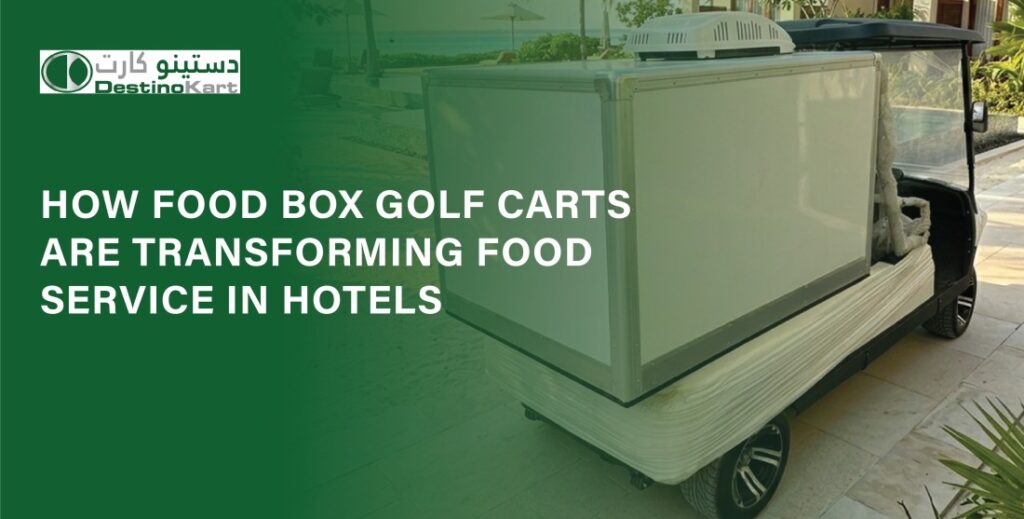
Food box golf carts are quietly becoming one of the most powerful tools in hotel food and beverage operations, reshaping how room service, poolside dining, and outdoor events are delivered. These compact, electric vehicles with insulated or stainless-steel rear boxes turn any corner of a property into a potential service point, without the noise, emissions, or delays of traditional vehicles.
What Is a Food Box Golf Cart?
A food box golf cart is a modified electric golf buggy fitted with a rear “box” or carrier designed specifically for food and beverage service. The box is usually:
• Insulated to keep food hot or cold
• Compartmentalized for mains, desserts, and beverages
• Lockable and weather-resistant for outdoor use
Some models have stainless-steel interiors, sliding or double-opening doors, and customized dimensions so hotels can tailor the capacity to their menu style and service volume. In essence, the cart becomes a mobile mini-kitchen pass for the entire property.
Elevating Guest Experience Anywhere on Property
Modern hotel guests expect fast, convenient, and high-quality food wherever they are—villas, pool cabanas, golf course, or beachside decks. Food box golf carts make this possible by bringing restaurant-level dishes directly to guests with minimal time lost in transit.
• In-room dining can reach far-flung villas and over-water suites without food going cold, thanks to insulated carriers designed to handle heat, cold, and moisture.
• Pool and lawn areas can have near-continuous snack and beverage service, with carts restocked from a central kitchen and circulating on fixed routes.
• Special experiences, such as sunset canapés on the beach or private garden dinners, are easier to execute because equipment and plated food can be moved discreetly and efficiently.
This level of mobility helps hotels turn more spaces into revenue-generating dining locations while still feeling seamless and upscale to the guest.
Boosting Operational Efficiency and Revenue
Beyond guest convenience, food box golf carts significantly improve back-of-house efficiency and profitability. Electric catering carts are built with generous storage for snacks and beverages, helping to minimize restocking time and trips to the kitchen. That means:
• Faster turnaround on orders and reduced bottlenecks in service corridors
• Lower labor time per delivery, as one cart can service multiple rooms or zones in a single run
• Less need for large trolleys or vans that can’t access narrow paths or landscaped areas
Hotels are increasingly under pressure to make food and beverage a true profit center rather than a cost burden. By extending service reach and improving speed, food carts support higher check averages (more opportunities to order) and better utilization of existing kitchen capacity. When paired with smart menu engineering and technology—like mobile ordering and contactless payment—carts become the last mile of an integrated, revenue-focused F&B strategy.
Sample service flow
A guest orders via the hotel app; the kitchen fires the order and plates into insulated boxes; a food box golf cart does a multi-stop route to rooms and poolside loungers in the same wing, all within tight temperature and time standards.
Sustainability, Safety, and Brand Image
As sustainability becomes central to hospitality, electric food box golf carts align perfectly with greener operations. They are quiet, emission-free at the point of use, and ideal for short-distance travel compared with fuel-powered vans or buggies. This reduces noise pollution in tranquil resort environments and supports eco-branding efforts.
They also reinforce safety and hygiene:
• Enclosed, lockable boxes protect food from contamination, weather, and unauthorized access during transit.
• Contactless delivery models—where staff can leave items at the door or designated zones—are easier to implement with specialized carts and app-based ordering.
Visually, a well-designed food box cart with consistent branding and clean finishes becomes a moving advertisement for the hotel’s F&B standards. It signals that the property invests in thoughtful, guest-centric service infrastructure.
Customization and Future Potential
One of the most exciting aspects of food box golf carts is how customizable they are. Manufacturers offer different box dimensions, internal layouts, and power options so hotels can match carts to their service style, whether it’s fine-dining room service, casual pool snacks, or banquet support. Options can include:
• Configurable compartments for hot boxes, ambient storage, and beverage crates
• Integration with auxiliary batteries for longer routes and multiple stops in large resorts
• Compatibility with existing fleets of electric golf buggies for easy retrofitting
As hotels continue to embrace mobile ordering, automation, and data-driven F&B management, food box golf carts are poised to become an even more strategic asset. They bridge the gap between kitchen and guest, allowing properties to turn every corner of the resort into a potential dining venue—quietly transforming food service from a static amenity into a dynamic, property-wide experience.