
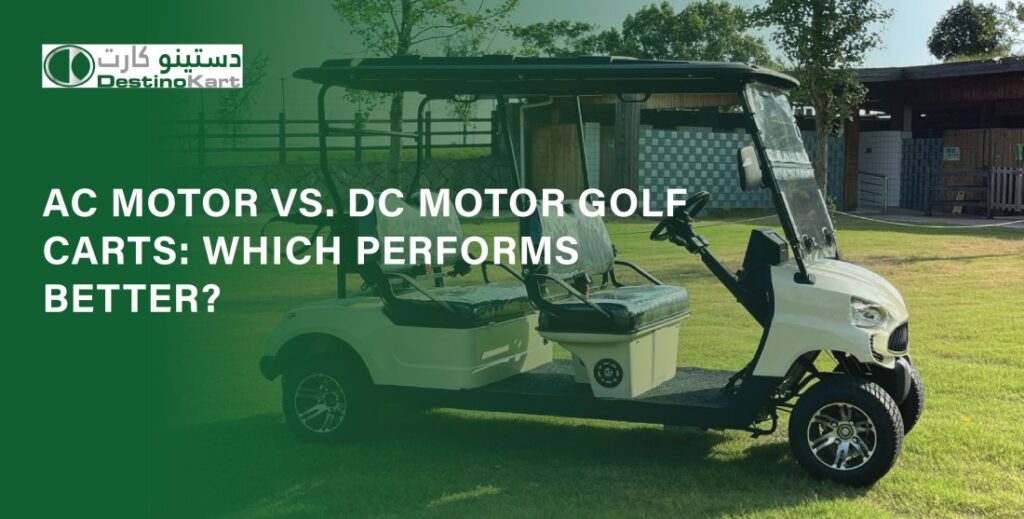
AC motor golf carts generally deliver smoother acceleration, better efficiency, and stronger hill-climbing, while DC motor carts win on upfront cost, simplicity, and ease of maintenance. Which “performs better” depends on how and where you drive, and what your budget and business priorities are in markets like the UAE.
What’s the Real Difference Between AC and DC?
In a golf cart, both AC (Alternating Current) and DC (Direct Current) motors are powered by the same DC batteries—the difference is in how the power is controlled and delivered to the wheels. AC systems use an inverter/controller to convert battery power into AC and drive a brushless motor, while DC systems typically use brushed motors with a simpler controller. This design difference is what leads to variations in torque, efficiency, speed capability, and maintenance needs between the two drive systems.
Performance: Speed, Torque, and Hills
AC golf carts are known for stronger hill-climbing, smoother power delivery, and higher potential top speeds, especially when carrying heavy loads or multiple passengers. They maintain torque more consistently on inclines and can modulate power very precisely, which gives a refined, “automotive-like” driving feel that many premium fleets now prefer. DC carts, by contrast, provide solid low-speed torque and a familiar feel but tend to lose performance on steeper terrain and under heavier loads, making them better suited to flat golf courses, gated communities, and light utility use.
Efficiency, Range, and Battery Life
Because AC motors are more efficient and manage power electronically with less mechanical loss, they typically offer longer range from the same battery capacity and can make better use of regenerative braking. In practice, this means fewer charging stops and potentially longer battery life when the cart is used intensively—valuable for resorts, hotels, and commercial fleets that run all day. DC systems are slightly less efficient overall, so they may have shorter range for the same pack; however, for light, occasional use on flat ground, many owners never feel this difference in daily operation.
Maintenance, Reliability, and Total Cost
DC motors use brushes and a commutator, which wear over time and require periodic inspection, replacement, and cleaning. This adds maintenance tasks and small but recurring costs over the life of the vehicle. AC motors are brushless, so there are fewer wear components, and routine care focuses on checking cables, cooling, and the inverter—resulting in very low ongoing maintenance and less downtime for busy fleets. Upfront, AC systems cost more than DC, both for factory-built carts and for conversion kits, so budget-sensitive buyers may prefer DC, while operators looking at lifetime operating cost often see value in AC despite the higher purchase price.

So, Which Performs Better—for You?
If you prioritize smooth performance, strong hill-climbing, and long-term operating efficiency— such as in resort transport, hotel shuttles, or commercial fleets in mixed terrain—AC motor golf carts generally perform better and justify their premium. They suit customers who expect modern EV behavior and are willing to invest more initially for lower maintenance and better uptime. If your use is mostly on flat ground, with moderate speeds and budget sensitivity—typical for simple golf course fleets, staff run-abouts, or community carts—DC motor golf carts offer more than enough performance at a lower cost and remain a very practical choice.