
Choosing between an electric and a gas golf cart isn’t just about power or performance—it’s also about how much time, effort, and money you’ll spend keeping your cart running smoothly. Here’s a detailed look at how maintenance differs between electric and gas golf carts, so you can make an informed decision.
Electric Golf Cart Maintenance
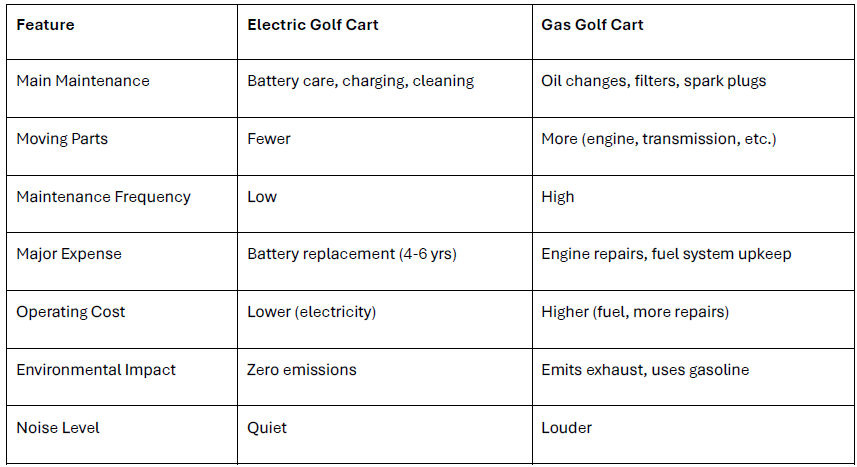
• Fewer Moving Parts: Electric carts have a simpler design, with fewer mechanical components than gas carts. This translates to less that can go wrong and fewer parts to maintain or replace.
• Battery Care: The main maintenance task is looking after the batteries. This includes regular charging, checking water levels (for lead-acid batteries), and cleaning terminals to prevent corrosion. Battery lifespan typically ranges from 4-6 years, and replacement is the most significant long-term expense.
• Minimal Routine Upkeep: There’s no need for oil changes, spark plug replacements, or air filter swaps. Occasional checks of the electrical system (controller, charger, wiring) are recommended, but these are less frequent and less intensive than gas engine maintenance.
• Cost and Effort: Electric carts are generally cheaper and easier to maintain over time, with lower running costs due to fewer service needs and no fuel expenses.
Gas Golf Cart Maintenance
• Engine Maintenance: Gas carts have a small combustion engine, similar to a lawnmower. Regular oil changes, air filter replacements, and spark plug inspections are necessary to keep the engine running well.
• Fuel System Upkeep: The fuel filter and carburettor require periodic cleaning or replacement. Neglecting these can lead to performance issues or breakdowns.
• More Wear and Tear: With more moving parts, gas carts are prone to more frequent repairs and higher long-term maintenance costs. Brake pads and other mechanical components also need regular inspection.
• Maintenance Schedule: Oil and filter changes are typically needed every 50 hours of operation, with other tasks (like valve adjustments and tune-ups) required at longer intervals. Sticking to the recommended schedule is crucial to avoid costly repairs down the road.
• Operating Costs: Gas carts require ongoing fuel purchases, and fluctuating gas prices can impact the total cost of ownership.
Side-by-Side Comparison
Conclusion
Electric golf carts are ideal if you want minimal maintenance, lower operating costs, and quiet, eco-friendly operation. Their main concern is battery care and eventual replacement. Gas golf carts maintenance, while offering more power and range, require more frequent and intensive maintenance, including regular engine and fuel system upkeep. For most users, especially those prioritizing convenience and lower long-term costs, electric carts are the clear winner in terms of maintenance. However, if you need extra power for heavy loads or hilly terrain, and don’t mind the extra upkeep, a gas cart may still be the right choice.