
Charging an electric golf cart in the UAE is very affordable—typically around AED 3 to AED 7 for a full charge, depending on battery size, charger efficiency, and your emirate’s electricity tariff. For most owners, it costs far less than fueling a petrol cart and can be done conveniently from a standard 220V outlet.
How the Cost Is Calculated
To estimate charging cost, use this simple formula:
Charging cost = Battery capacity (kWh) × Electricity rate (AED/kWh) × Charging losses Most electric golf carts use 48V battery systems with capacities of roughly 5 kWh to 10 kWh. Charging is not 100% efficient, so it is sensible to add about 10–15% for energy lost as heat during charging.
In Dubai, DEWA’s residential base tariff starts at AED 0.230 per kWh for the first 2,000 kWh monthly, with a fuel surcharge of about AED 0.060 per kWh. This makes the practical rate roughly AED 0.29 per kWh for many households.
Estimated Cost Per Full Charge
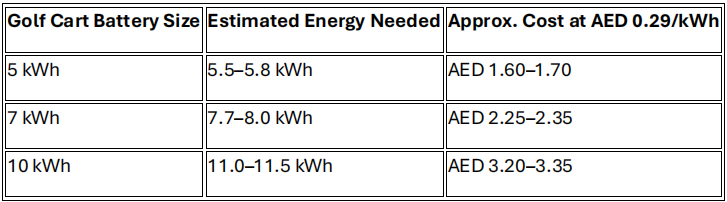
These figures represent the electricity used by the Golf cart’s battery. In real use, a larger cart, older lead-acid batteries, frequent stops, heavy loads, and UAE summer temperatures can increase consumption slightly.
For a typical 48V electric golf cart, a full charge will usually fall between AED 2 and AED 4. Even a larger six- or eight-seater model with a bigger battery pack generally remains below AED 5 per charge. Electric carts commonly provide around 15–50 miles per charge, depending on the model, terrain, passenger load, and battery condition.
Monthly and Yearly Charging Cost
If you charge your cart once daily, the monthly cost is easy to estimate:
• AED 3 per charge × 30 days = AED 90 per month
• AED 90 × 12 months = AED 1,080 per year
For a commercial fleet, such as a resort, community, hotel, or golf course, the cost is still manageable. For example, 10 carts charged daily at AED 3 each would cost approximately AED 900 per month or AED 10,800 per year in electricity. This is one reason electric golf carts are popular for UAE resorts, gated communities, campuses, and event venues
Factors That Affect Your Bill
Several factors can change the final charging cost:
• Battery type: Lithium batteries are usually more efficient and maintain performance better than older lead-acid batteries.
• Battery age: Worn batteries may require more frequent charging and deliver shorter range.
• Cart size: Six-seaters and utility carts use more energy than two-seaters.
• Usage conditions: Hills, sand, heavy loads, and continuous operation increase power consumption.
• Charger quality: A smart charger can reduce wasted electricity and protect battery life.
• Electricity tariff: Rates vary by emirate and may increase with higher monthly consumption.
Tips to Reduce Charging Costs
• Charge after each use instead of allowing the battery to drain deeply.
• Use the manufacturer-approved charger and avoid cheap, unsuitable chargers.
• Park and charge in a shaded or ventilated area where possible.
• Keep tyres properly inflated and avoid carrying unnecessary weight.
• Schedule battery inspections, especially before peak summer months.
• Consider lithium batteries when replacing an ageing lead-acid pack, as they can lower long-term operating costs.
Final Word
For most UAE golf cart owners, charging costs only a few dirhams per full charge—often less than the price of a coffee. With low electricity consumption, minimal fuel expenses, and simple charging from a standard outlet, electric golf carts remain one of the most economical transport options for resorts, communities, businesses, and personal use across the UAE.