
Maintaining the correct tire pressure in your golf cart is one of the simplest yet most impactful steps you can take to ensure optimal performance, safety, and longevity of your vehicle. Despite being easy to overlook, tire pressure plays a crucial role in how your golf cart handles, how comfortable your ride is, and how long your tires last.
1. Why Proper Tire Pressure Matters
2. Recommended Tire Pressure
3. Factors Influencing Optimal PSI
4. How to Check and Maintain Tire Pressure
1. Why Proper Tire Pressure Matters
• Performance and Efficiency: Properly inflated tires allow your golf cart to roll smoothly, improving handling, speed, and maneuverability. This also enhances battery efficiency for electric carts and fuel efficiency for gas-powered models, saving you money and reducing the frequency of recharging or refueling.
• Comfort: The right tire pressure cushions you from bumps and dips in the terrain. Overinflated tires can lead to a harsh, bouncy ride, while underinflated tires make the cart feel sluggish and unresponsive.
• Safety: Incorrect tire pressure can compromise your golf cart’s handling and braking, increasing the risk of accidents. Proper pressure ensures stable steering and predictable stopping power.
•Tire Longevity: Both overinflated and underinflated tires wear unevenly, leading to premature replacement. Maintaining the recommended PSI promotes even wear, maximizing tire lifespan and reducing long-term maintenance costs.
•Adaptability: The right tire pressure helps your cart adapt to different terrains, whether you’re cruising on smooth fairways or tackling rougher paths. Lower pressures can provide more grip on uneven surfaces, while higher pressures are better for paved or smooth ground.
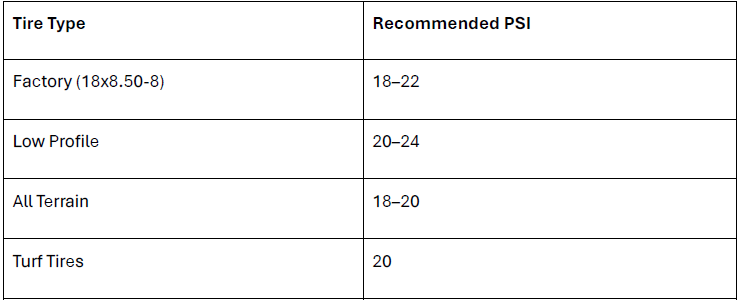
2. Recommended Tire Pressure
Most golf cart tires require a pressure between 15 and 25 PSI (pounds per square inch), though some specialty tires may need up to 40 PSI for off-road use. Always consult your owner’s manual or check the tire sidewall for the manufacturer’s specific recommendation.
3. Factors Influencing Optimal PSI
• Terrain: Smoother surfaces need higher PSI; rough or sandy terrains may benefit from slightly lower PSI for better traction.
• Load: Heavier loads require a slight increase in tire pressure to avoid excessive tire flex and strain.
•Temperature: Tire pressure fluctuates with temperature changes—air expands in heat and contracts in cold—so adjust accordingly.
•Tire Type and Size: Different tires (e.g., turf vs. off-road) have different optimal PSI ranges. Always check the specifications for your particular tire.
4. How to Check and Maintain Tire Pressure
• Use a tire pressure gauge to check each tire at least once a month or before long rides.
• Inflate or deflate tires to the recommended PSI as needed, and always check when the tires are cold for the most accurate reading.
• Regularly inspect tires for visible wear, damage, or embedded debris.