
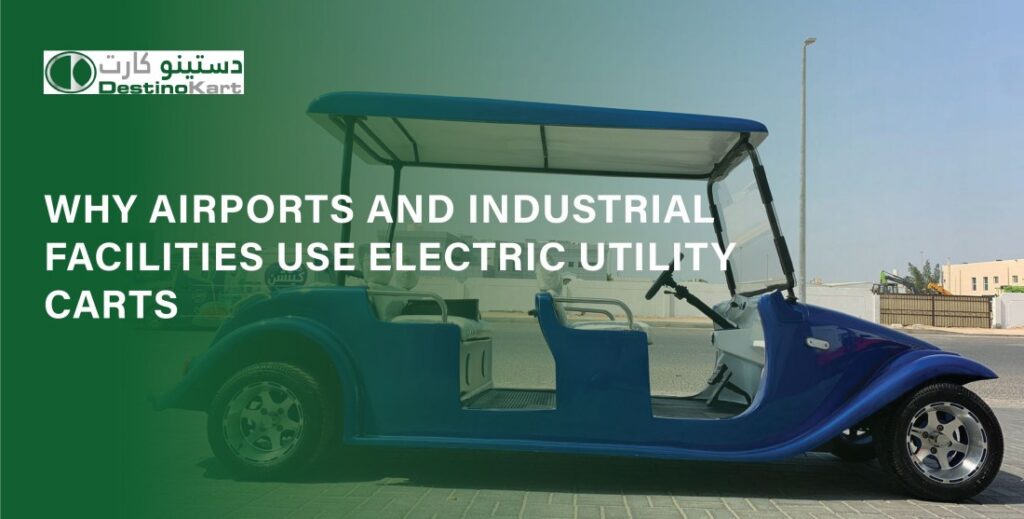
Airports and industrial facilities use electric utility carts because they move people and cargo efficiently while cutting fuel costs, noise, and emissions, all in tight, indoor-heavy environments
What Are Electric Utility Carts?
Electric utility carts are compact, battery-powered vehicles designed to transport people, tools, luggage, and materials over short to medium distances inside large sites. They sit between a golf cart and a small truck, with options for flatbeds, enclosed cargo boxes, tow hitches, and seating layouts.
Because they run on electric drivetrains, they operate quietly, produce zero tailpipe emissions, and are well suited to mixed indoor–outdoor use. In many models, ranges of several dozen kilometers and payloads up to a few thousand pounds make them a practical replacement for small fuel-powered trucks and UTVs in busy facilities.
Why Airports Use Electric Carts
Airports are complex logistics hubs where staff must move passengers, baggage, catering supplies, and maintenance teams quickly and safely across terminals and ramps. Electric carts fit this environment for several key reasons
• Zero local emissions
Airports increasingly pursue sustainability goals and must manage air quality in enclosed spaces like terminals and baggage halls. Electric carts produce no exhaust at point of use, supporting cleaner indoor air and helping airports meet environmental regulations and ESG targets.
• Cost and efficiency advantages
Electricity is typically cheaper per kilometer than petrol or diesel, and electric drivetrains have fewer moving parts, cutting routine maintenance such as oil changes and engine overhauls. For high-utilization fleets—like passenger buggies or baggage support vehicles—these savings compound over time and improve total cost of ownership.
• Maneuverability in tight spaces
Airport corridors, jet bridges, and service roads often have narrow turning radii and mixed pedestrian traffic. Compact electric utility carts are designed for low-speed operation and tight turns, allowing staff to navigate safely through crowded terminals and service lanes.
• Versatile configurations
Airports use passenger buggies, burden carriers, tow tractors, and cargo carts built on similar electric platforms. The same underlying vehicle can be equipped for passenger transfer, baggage movement, catering runs, or maintenance support, simplifying fleet management and training.
Example: A battery-operated passenger buggy in a large international terminal can shuttle elderly travelers from check-in to the gate at low speed, with minimal noise and no fumes, while a flatbed electric golf cart simultaneously delivers catering supplies along back-of-house service routes.
Why Industrial Facilities Use Electric Carts
Factories, warehouses, logistics hubs, and large campuses rely on electric utility carts to move goods and personnel reliably inside and around their sites. These environments present distinct challenges that electric carts are well suited to solve
• Safe indoor operation
Many industrial facilities combine indoor production zones with attached yards and loading areas, where exhaust fumes from small combustion vehicles can accumulate. Electric carts avoid indoor emissions, improving air quality and helping facilities comply with health and safety standards.
• Material handling and towing power
Modern electric burden carriers can haul loads in the range of thousands of pounds and tow substantial trailers, effectively replacing small trucks or tractors for in-plant logistics. This lets operators standardize around electric platforms without sacrificing hauling capacity needed for tools, pallets, or heavy components.
• Reduced maintenance downtime
Industrial fleets often run multiple shifts, where equipment uptime directly affects productivity. Electric carts’ simpler mechanical design and fewer wear items mean less time out of service for repairs and more predictable maintenance scheduling.
• Lower operating cost per trip
Over frequent short trips, the cost savings from using electricity rather than liquid fuel become significant. Combined with potential rebates or incentives for electric fleet adoption, many industrial sites find that electric carts deliver attractive lifecycle economics.
• Flexibility across sectors
Electric utility carts are now common in logistics centers, manufacturing plants, government campuses, stadiums, and educational institutions, all with similar needs for short-range transport in controlled environments. Managers can deploy carts for maintenance rounds, inventory checks, landscaping, and internal deliveries without reconfiguring heavy infrastructure.
Sustainability, Regulations, and Incentives
Airports and industrial operators increasingly adopt electric carts as part of broader sustainability strategies and compliance requirements. Governments and utilities in many regions offer rebates, tax credits, or preferential tariffs to organizations that electrify their fleets, including utility vehicles and internal transport.
By cutting tailpipe emissions, reducing noise pollution, and lowering energy consumption per trip, electric carts help operators demonstrate progress on climate commitments and corporate responsibility. This can also support brand positioning—particularly for airports that market themselves as modern, eco-conscious gateways for international travellers.
Future Outlook for Electric Utility Carts
Technology advances in batteries, charging infrastructure, and fleet management software continue to make electric utility carts more capable and convenient. Longer ranges, faster charging, and smart features like regenerative braking and remote diagnostics are turning these vehicles into core assets rather than specialty equipment.
Public and on-site charging stations are becoming more common, reducing range anxiety and simplifying overnight charging for large fleets. As regulations tighten around emissions and noise, and as operating costs remain under pressure, both airports and industrial facilities are likely to expand their electric utility cart fleets, replacing older combustion-based vehicles and standardizing on clean, efficient internal transport.