

Inside a modern golf cart showroom, customers can expect a mix of lifestyle experience and technical detail: multiple model lines on display (2–, 4–, 6– and 8–seaters), clear specs on batteries and motors, and a growing emphasis on comfort, safety and smart tech features. The environment usually feels closer to an automotive boutique than a traditional pro-shop, with customization, financing, and test drives all integrated into the visit.
First Impressions When You Walk In
A modern golf cart showroom is designed to make carts feel like aspirational vehicles, not just course utilities. Expect bright lighting, polished floors, and carts staged by lifestyle (resort, residential community, golf course, off-road) so visitors can quickly connect models to real-world use.
• Reception or lounge area for welcoming walk-ins, with coffee, brochures, and digital screens looping model videos.
• Clearly zoned display areas: personal use carts, commercial/fleet units, luxury or lifted models, and sometimes street-legal LSVs.
Types of Models on Display
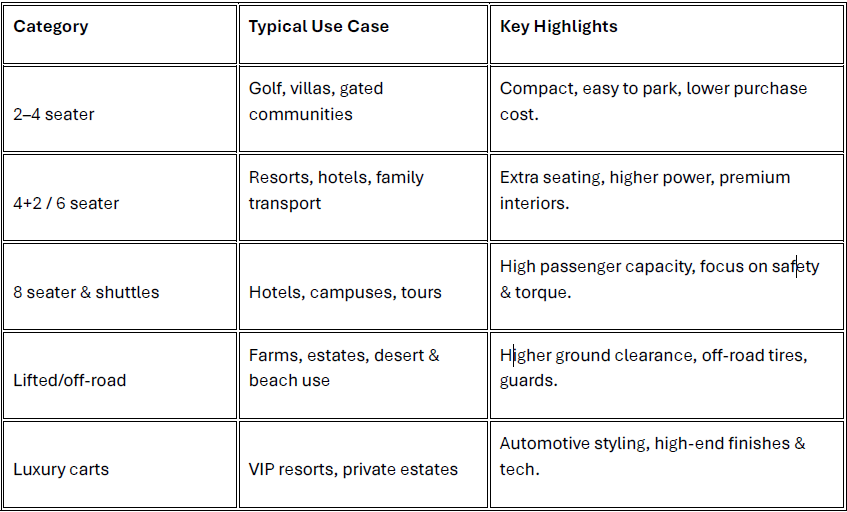
Showrooms usually organize inventory by seating capacity, performance level, and intended application. This helps buyers compare like-for-like options in a single glance.
• Core line-up: 2-seater Golf Cart and 4-seater personal Golf Cart, 4+2 seater and 6-seater resort or community shuttles, and higher-capacity 8-seat shuttles for hotels and campuses.
• Powertrain variety: fully electric lithium carts, traditional lead-acid options, and occasionally petrol units for specific markets or heavy-duty use.
Model Category Snapshot
Design, Comfort & Interior Features
Modern carts are sold on comfort as much as capability, so interiors receive a lot of attention in showrooms. Customers are encouraged to sit inside multiple models to compare space, seating, and visibility.
• Ergonomic, plush seating with bolstered cushions, premium upholstery, and improved lumbar support, often in 4–6 seat configurations.
• Spacious cabins with better legroom, grab handles, step plates, and easy-access control panels designed for frequent on-off use
Performance & Powertrain Highlights
Sales teams usually present performance in simple, real-life terms: how fast it goes, how far it travels, and how it behaves on slopes. Specs boards near each cart help visitors compare without needing expert knowledge.
• Electric systems from around 48 V with motors in the 3–5 kW range on mainstream models, supporting speeds around 25–40 km/h depending on tuning and regulations.
• Battery choices often include traditional deep-cycle lead-acid packs for lower upfront cost and lithium packs for reduced maintenance, faster charging, and longer life cycles.
Safety & Technology
Safety and smart tech have quickly become key selling points, especially for residential and resort users. In a modern showroom, many of these features are demoed live on floor units.
• Safety equipment: LED headlights, taillights, turn signals, brake lights, mirrors, horns, seatbelts, improved braking systems, and speed limiters to control maximum speed.
• Tech features: TFT/LCD touch displays, Bluetooth audio, Apple CarPlay/Android Auto on premium models, reverse cameras, and real-time battery status displays.
Customization & Accessories Corner
A dedicated customization area is common, where customers can “build” their cart visually. This helps position carts as lifestyle products rather than generic vehicles.
• Choices in body colors, wheel and rim designs, roof styles, seat stitching, and trim packages, especially for luxury and community carts.
• Accessories such as weather enclosures, windshields, storage boxes, coolers, USB ports, upgraded sound systems, and rear cargo or golf bag kits.
After-Sales, Warranty & Test Drives
Modern showrooms emphasize long-term support almost as strongly as the sale itself. Customers are usually guided through maintenance expectations and operating costs before committing.
• Clear information on warranties, recommended service intervals, battery care, and availability of spare parts and service centers.
• On-site or nearby test drive zones where visitors can experience acceleration, braking, comfort over bumps, and noise levels before buying.
What Shoppers Should Expect & Prepare
Visitors who come prepared with a short checklist usually get much more from a showroom visit. A modern setup is designed to answer these questions quickly and visually.
• Expect sales staff to ask about use case (golf, community, resort, commercial), terrain, daily distance, passenger count, and charging options at your site.
• Come ready to compare: seating capacity, battery type, stated range, safety equipment, tech features, warranty terms, and total cost of ownership—not just sticker price.